Medical Reality
Ketamine is an essential WHO medicine used safely for decades. Clinical use is controlled, monitored, and entirely different from recreational misuse.
5136 East Stop 11 Rd, Suite 30
Indianapolis, Indiana, 46237
Hours
Mon - Fri: 8am - 5pm
Sat - Sun: Closed
Understanding the reality behind ketamine therapy helps bridge the gap between its reputation and its clinical potential for mental health recovery.
Ketamine is an essential WHO medicine used safely for decades. Clinical use is controlled, monitored, and entirely different from recreational misuse.
It doesn't just mask pain; it targets glutamate to promote neuroplasticity, helping the brain rebuild connections disrupted by trauma or depression.
While often used for treatment-resistant cases, it is also supported for anxiety, PTSD, OCD, and bipolar depression when standard treatments fail.
Ketamine therapy is a temporary, structured course of treatment—not an indefinite commitment. Most patients remain awake and fully monitored.
Hearing “ketamine therapy” can raise eyebrows at times. Some people have only heard the name in the context of recreational drug use. Others have seen headlines that make it sound like a miracle cure. Many people land somewhere in between these two reactions, feeling unsure what to believe.
The hesitation makes complete sense. Ketamine therapy is still relatively new as a mainstream mental health treatment. So, if you or someone you love is wondering whether it might be worth exploring, the most helpful thing we can offer is clarity.
Below, we walk through five of the most common misconceptions we hear, and what the evidence and clinical experience show.
Ketamine has a complicated reputation, and it's fair to acknowledge that. It has been misused recreationally, which is part of why many people approach it with skepticism.
But ketamine's story in medicine is much older than its party drug reputation. It was developed as an anesthetic in the 1960s and has been used safely in clinical settings for decades. The World Health Organization lists it as an essential medicine.
Its application in mental health is newer, but it is built on a growing body of
peer-reviewed research. When administered at carefully controlled doses by a licensed clinical team, ketamine is a very different experience from recreational misuse. The context, the dosage, the monitoring, and the intent are entirely different, and those differences matter enormously.
This myth comes from a reasonable place. If someone experiences dramatic relief quickly, it can feel like something is being masked rather than healed.
What's actually happening is more interesting than that. Ketamine influences glutamate, a neurotransmitter that plays a central role in how the brain's circuits communicate with one another. When someone has struggled with depression or trauma for a long time, certain neural pathways can become rigid and underactive (almost like worn-down grooves that the brain keeps defaulting to).
Ketamine appears to help promote the formation of new neural connections, a process sometimes called neuroplasticity. Rather than simply dulling symptoms the way some medications might, it may help the brain rebuild communication pathways that depression and trauma have disrupted.
Rather than simply suppressing symptoms, ketamine is believed to influence glutamate activity in the brain, potentially helping strengthen communication pathways involved in mood regulation, emotional processing, and recovery.
It's true that ketamine therapy is most commonly associated with treatment-resistant depression, a clinical term for cases where someone has tried two or more antidepressant medications without adequate relief. And for those patients, ketamine therapy can be truly life-changing.
But treatment-resistant depression isn't the only situation where ketamine may be considered. Research increasingly supports its potential for anxiety disorders, PTSD, bipolar depression, OCD, and even certain chronic pain conditions. Therefore, the common thread here isn't necessarily severity, but a pattern of inadequate response to standard treatments.
If you've felt like traditional approaches haven't quite worked for you, that's worth a conversation with a clinical team. A thorough evaluation is always the first step, and it's the only way to know whether ketamine therapy might be appropriate for your specific situation.
While ketamine therapy is often associated with treatment-resistant depression, research and clinical experience increasingly support its use for anxiety, PTSD, OCD, bipolar depression, and related conditions when traditional approaches have not provided adequate relief.
This concern comes up often, and those feelings are valid. Ketamine can produce a dissociative effect, a sense of feeling somewhat detached from your body or surroundings. Many patients describe this sensation as peaceful or even revelatory. For others, the idea is understandably unsettling before they've experienced it.
A few things worth knowing:
The people who tend to have the most difficult time with ketamine sessions are those who go in feeling anxious and uninformed. The best antidote to that is a thorough consultation and a clinical mental health team you trust. Good preparation makes a real difference.
Ketamine therapy sessions are carefully supervised in a calm clinical environment. Patients remain awake, monitored, and guided throughout the experience, with effects that are temporary and typically resolve shortly after treatment ends.
Concerns about dependency are reasonable, especially for anyone who has navigated the experience of adjusting to or discontinuing other psychiatric medications.
Ketamine therapy is typically delivered as a structured course of infusions rather than an open-ended, indefinite commitment. Many patients receive an initial series of sessions and then assess their response with their clinical team. Some patients benefit from periodic maintenance infusions over time; others do not need them. Either way, the goal is to use ketamine as a tool that supports recovery and not as a permanent requirement for functioning.
It's also worth noting that ketamine therapy is often used alongside ongoing psychotherapy or other treatments, not as a standalone replacement. The infusions may help create a window of neurological openness; what a patient does during and after that window (including continued work in therapy) can have a significant influence on lasting outcomes.
Most patients begin with a planned series of sessions followed by ongoing evaluation with their clinical team. Some people benefit from maintenance sessions over time, while others continue improving through therapy and supportive care without ongoing infusions.
Skepticism is healthy. Wanting to understand the treatment options you are considering before you commit to anything is a sign of good judgment. Our team is here to help.
Every patient who comes to Accentus Mental Health for our ketamine therapy services begins with a comprehensive evaluation. Our clinical team reviews your history, your symptoms, and your treatment goals before any decision is made about whether ketamine therapy is appropriate for you. Any decision to prescribe or administer ketamine (or any other treatment) is made solely on the professional clinical judgment of our experienced licensed practitioners.
If you've been living with depression, PTSD, anxiety, or another mental health condition and haven't found the relief you need and deserve, call us at (317) 721-4169 to schedule a consultation. We serve patients throughout Indianapolis, Avon, Greenwood, Plainfield, and the surrounding communities.
Accentus Mental Health serves Indianapolis and surrounding communities with consultation-driven care.
Experiencing depression or a neurological disorder? Remember, you are not alone. Get help today!

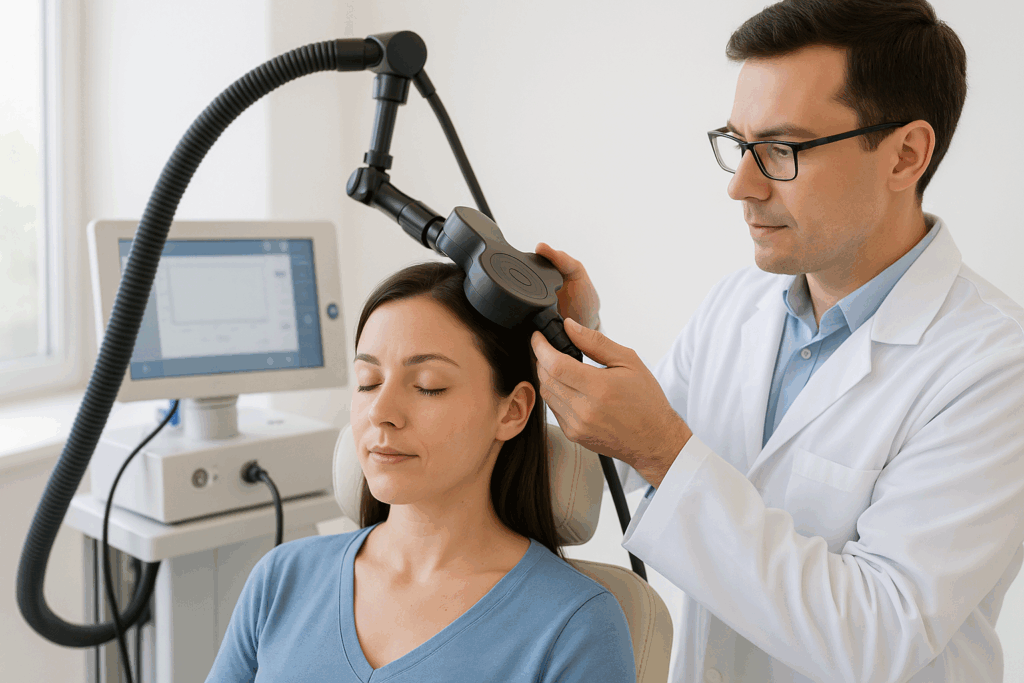


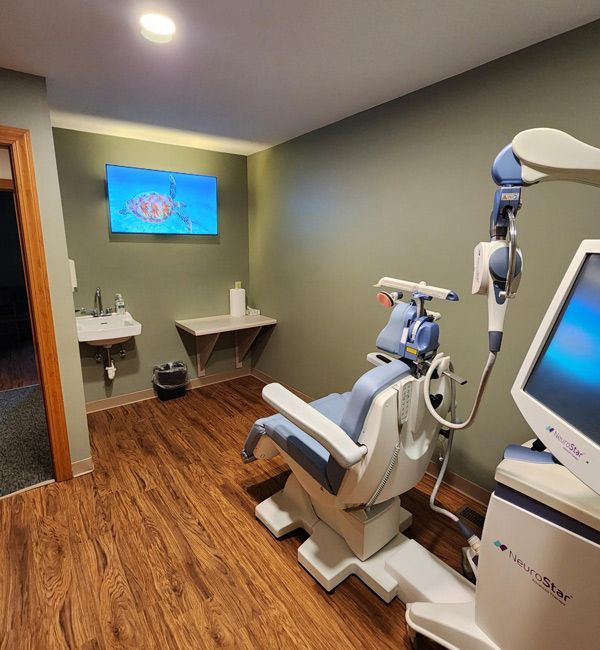


Accentus Mental Health cares greatly about your mental health. If you reside in or near Indianapolis, Greenwood, Franklin, Whiteland, Bargersville, Mooresville, Martinsville, Monrovia, Plainfield, Avon, or the surrounding area, we will help you live the life you were meant to live. Our services are covered by most insurance plans, are FDA-cleared, non-invasive, and involve no drug side effects.