Proven & Non-Invasive
Backed by thousands of clinical studies, TMS achieves a meaningful response in over half of patients. It causes zero systemic side effects and requires no anesthesia or downtime.
5136 East Stop 11 Rd, Suite 30
Indianapolis, Indiana, 46237
Hours
Mon - Fri: 8am - 5pm
Sat - Sun: Closed
TMS therapy offers a clinically proven, non-invasive option for treatment-resistant depression. Understanding its core advantages and practical considerations helps you determine if it's your right path forward.
Backed by thousands of clinical studies, TMS achieves a meaningful response in over half of patients. It causes zero systemic side effects and requires no anesthesia or downtime.
Unlike temporary fixes, the vast majority of patients remain well months after treatment. Any eventual return of symptoms can be safely and effectively managed with quick booster sessions.
Treatment requires roughly 36 brief sessions across 6–7 weeks. While frequent, sessions last only 20–40 minutes and easily fit into standard morning or flexible daily schedules.
Mild scalp discomfort or a temporary early "dip" in mood can occur as your brain adjusts to new neural stimulation, both of which quickly resolve as therapy progresses.
TMS therapy received FDA approval for depression treatment in 2008 and has since been backed by thousands of clinical studies. But, as with any medical treatment, it's worth understanding both the benefits and the limitations before you commit.
This blog looks at the pros and cons of TMS therapy, and explains why, for many people struggling with treatment-resistant depression, the advantages far outweigh any potential drawbacks.
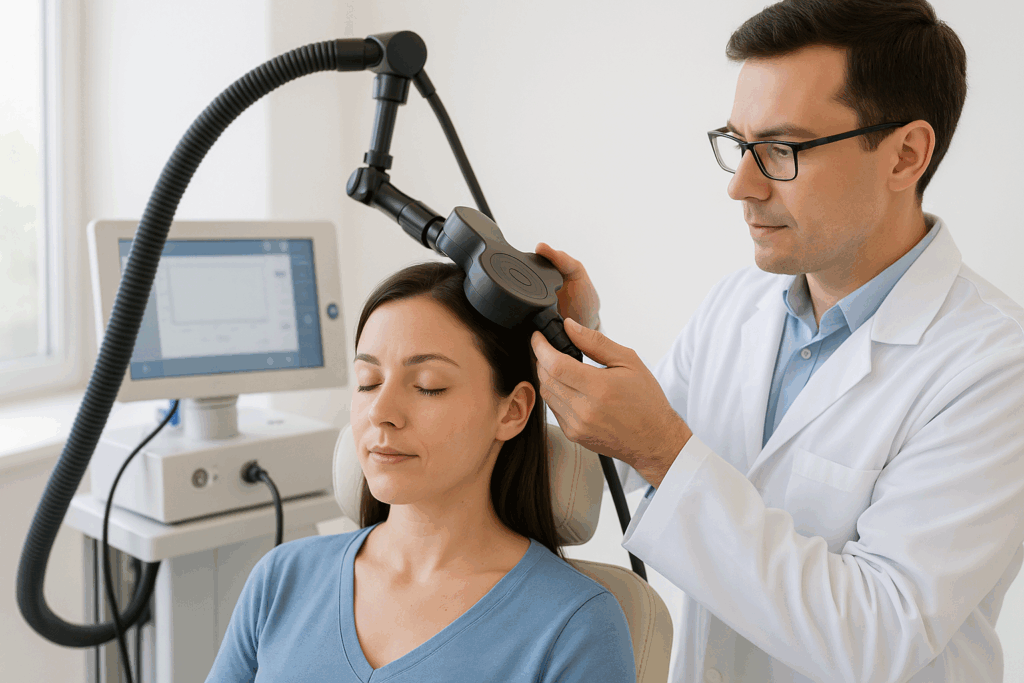
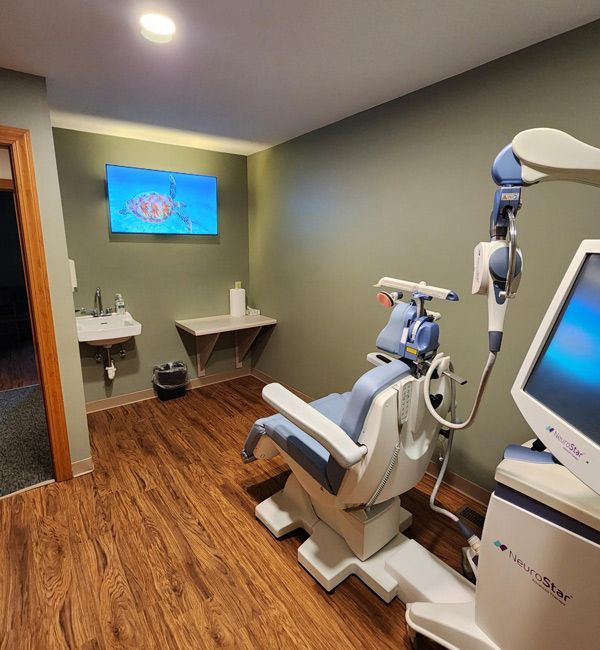
TMS is a non-invasive brain stimulation treatment that uses focused magnetic pulses to activate nerve cells in regions of the brain associated with mood regulation. A specialized coil is placed near the scalp, and these pulses help "rewire" underactive neural circuits to restore healthier brain activity without surgery, anesthesia, or medication.
TMS is most commonly prescribed for treatment-resistant depression, a condition that occurs when one or more antidepressants have failed to produce adequate results
in treating major depressive disorder. But many patients turn to
TMS for OCD, PTSD, addiction, and more.
A study published in Psychiatry Research found that 54% of patients achieved a clinically meaningful response (at least 50% improvement in mood symptoms) after completing a course of rTMS therapy, based on analysis of hundreds of patients treated at UCLA Health from 2009 to 2022.
Research from a 2024 consensus review, which analyzed over 2,396 abstracts and manuscripts on
TMS and depression, confirmed that TMS offers a well-established efficacy and safety profile for patients with depression, with emerging techniques like accelerated iTBS and MRI-guided stimulation showing even more promising results.
One of TMS's greatest strengths is what it doesn't do. Unlike antidepressants, TMS does not enter your bloodstream, affect your liver, or require your body to metabolize a drug. There are no systemic side effects, meaning you won't experience the weight changes, sexual dysfunction, appetite disruption, or emotional blunting that many people find intolerable with medication.
Unlike electroconvulsive therapy (ECT), another option for treatment-resistant depression, TMS requires
no anesthesia, sedation, or hospitalization. Patients sit comfortably during sessions and walk out the door afterward.
The most commonly reported side effects of TMS are mild scalp discomfort or headaches at the treatment site, which typically diminish within the first few sessions as your brain adapts. Most patients complete a full TMS course without any significant side effects or complications.
And research confirms this. A comprehensive summary of adverse events from five multicenter deep TMS trials confirmed TMS's strong safety profile across large patient populations.
Individual TMS sessions typically last 20–40 minutes. You can drive yourself to and from appointments, and you can return to work, school, or your regular activities immediately after. There's no recovery time and no foggy medication side effects to manage.
One of the most reassuring things about TMS is how long the results tend to last. A study that tracked patients for 6 months after treatment found that the vast majority remained well. Most of those who did experience a return of symptoms got back on track quickly with a few additional sessions. In other words, TMS isn't just a short-term fix. For most people, the relief is real, and it sticks.
1.
It Requires a Consistent Time Commitment
A standard TMS course involves roughly 36 sessions over 6–7 weeks, typically 5 days a week. While each session is brief, frequent appointments can be challenging for people with demanding jobs or complex schedules. That said, many clinics offer early morning or flexible scheduling to accommodate working patients.
Think of it as a short-term investment of your time for long-term mental health gains. Most patients who complete the course of treatment report that the schedule was manageable and worth the effort.
2.
Some Patients Experience a Temporary Dip
Some patients notice a brief worsening of symptoms in the early sessions of TMS, sometimes called the "TMS dip." This “dip” is thought to reflect the brain adjusting to new stimulation patterns as neural pathways begin to reorganize. It's temporary.
As treatment progresses, the brain adapts, and healthy activity is restored. Your care team at Accentus Mental Health will monitor you closely throughout the process to provide support if this occurs.
3.
Insurance Coverage Isn't Universal
TMS is covered by many major insurance providers for treatment-resistant depression, but coverage policies and eligibility criteria vary. Some plans require documentation of failed medication trials before approving TMS.
Our team works directly with patients to verify benefits, navigate insurance requirements, and explore financing options, so cost doesn't have to stand in the way of getting care.
4.
Relapse Is Possible (But Manageable)
Like all treatments for depression, including antidepressants, TMS is not a guaranteed permanent cure. Some patients may experience a return of symptoms months or years after treatment. The good news is that most people who responded well to their initial TMS course also respond well to maintenance or "booster" sessions.
5.
Very Small Risk of Seizure
The risk of a seizure from TMS is extremely rare, estimated at fewer than 1 in 60,000 treatment sessions. People with a personal or family history of seizures or epilepsy may not be appropriate candidates. Your Accentus clinician will conduct a thorough medical screening before recommending TMS to ensure it's safe for you.
The Accentus Mental Health team offers TMS therapy in Indianapolis and is committed to helping you find the right path to lasting wellness. If you’re ready to find out if TMS is right for you, reach out to us today to schedule a consultation.
You don't have to keep trying treatments that aren't working. A better path is possible.
Accentus Mental Health provides comprehensive clinical evaluations and custom treatment settings in Indianapolis.
Experiencing depression or a neurological disorder? Remember, you are not alone. Get help today!





Accentus Mental Health cares greatly about your mental health. If you reside in or near Indianapolis, Greenwood, Franklin, Whiteland, Bargersville, Mooresville, Martinsville, Monrovia, Plainfield, Avon, or the surrounding area, we will help you live the life you were meant to live. Our services are covered by most insurance plans, are FDA-cleared, non-invasive, and involve no drug side effects.