Medication & Therapy Review
A thoughtful clinical review optimizes current dosages, builds safe tapering schedules, or pairs personalized psychiatric management with a fresh, targeted psychotherapy approach.
5136 East Stop 11 Rd, Suite 30
Indianapolis, Indiana, 46237
Hours
Mon - Fri: 8am - 5pm
Sat - Sun: Closed
5136 East Stop 11 Rd, Suite 30
Indianapolis, Indiana, 46237
Mon - Fri: 7:30am - 4:30pm
Sat - Sun: Closed
If medication hasn't given you the relief you need, you are not out of options. A personalized, layered care approach can help you discover effective next steps for treatment-resistant depression in Central Indiana.
A thoughtful clinical review optimizes current dosages, builds safe tapering schedules, or pairs personalized psychiatric management with a fresh, targeted psychotherapy approach.
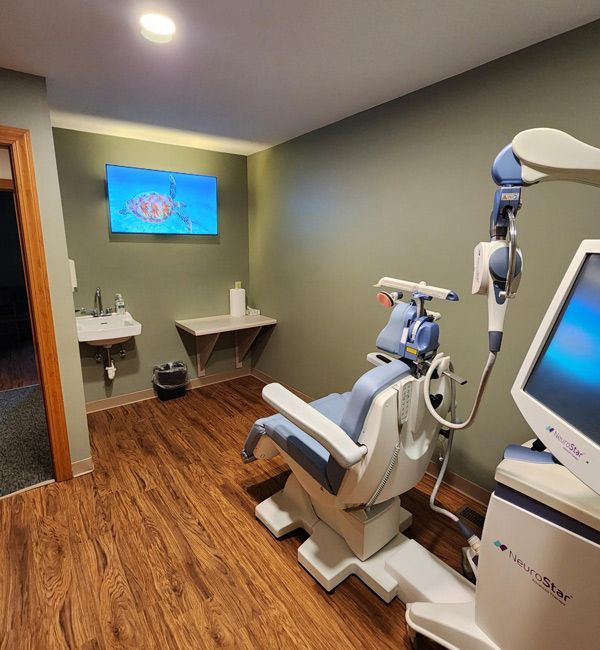
Transcranial Magnetic Stimulation (TMS) is a non-invasive, outpatient option that uses targeted magnetic pulses to stimulate underactive brain areas involved in mood regulation.
An FDA-approved esketamine nasal spray delivered in a certified medical setting under professional supervision, specifically designed for treatment-resistant depression.
IV ketamine treatments are delivered in a tightly monitored clinical setting to provide rapid relief and a layered alternative path when traditional therapeutics stall.
When you start an antidepressant, it is natural to hope the weight of depression will finally begin to lift. For many people, medication can be an important part of treatment. For others, the first option does not help enough, side effects become hard to tolerate, or symptoms improve for a while and then return.
That can feel discouraging, but it does not mean you are out of options. Depression is treatable, and a different approach may be available. If you are in Indianapolis, Avon, Greenwood, Plainfield, Franklin, or another nearby Central Indiana community and your current depression treatment is not giving you the relief you need, the next step is not to simply push through. The next step is to get a careful review of what you have tried, what you are still experiencing, and which evidence-based treatment options may fit your needs now.
If you are thinking about harming yourself or feel at risk of acting on suicidal thoughts, call or text 988 or use the 988 Suicide & Crisis Lifeline chat for immediate support. For non-emergency concerns, a consultation with a mental health provider can help you understand what is happening and what to consider next.
The medication may not have been taken long enough or at a therapeutic dose.
Unpleasant effects can make consistency difficult and reduce treatment success.
Sleep issues, hormones, medical conditions, and stress can affect outcomes.
Sometimes symptoms require a closer look at diagnosis or treatment strategy.
The National Institute of Mental Health explains that depression can affect mood, sleep, appetite, energy, concentration, decision making, and interest in daily life. It can also look different from person to person. That is one reason treatment sometimes takes adjustment.
An antidepressant may not work as expected for many reasons. Sometimes the medication has not been taken long enough at a therapeutic dose. Sometimes side effects make it difficult to stay consistent. Other medications, medical conditions, sleep problems, hormonal changes, major stress, grief, or trauma symptoms may also affect how a person responds. In some cases, the original diagnosis may need a closer look.
The goal is not to blame the patient or assume the medication was the wrong choice. The goal is to step back and ask a better question: what does your current treatment plan need in order to work better for you?
If antidepressants are not working, a medication review is often the safest starting point. A psychiatric provider can look at your current medication, past medication history, dose, timing, side effects, other prescriptions, supplements, and overall health history. This review may lead to a dose adjustment, a medication change, a combination strategy, or a plan to reduce side effects.
At Accentus Mental Health, medication management is built around individualized care, regular monitoring, and adjustments when needed. That matters because depression treatment is rarely one-size-fits-all. Some people need a different antidepressant. Some need medication and therapy together. Others may be good candidates for advanced options when traditional treatment has not provided enough relief.
It can be tempting to quit an antidepressant when it seems ineffective or unpleasant. Stopping suddenly can cause withdrawal-like symptoms, mood changes, sleep problems, or a return of depression symptoms. A provider can help you decide whether to continue, change, taper, or replace a medication in a safer way.
Medication can help with symptoms, but therapy can help you understand patterns, build coping skills, process trauma, improve relationships, and create practical changes in daily life. For some people, medication becomes more effective when therapy is part of the plan.
Accentus offers psychotherapy for Indianapolis-area patients, including support for depression, anxiety, PTSD, OCD, relationship concerns, and other mental health needs. A therapist can help identify whether your depression is connected to grief, burnout, trauma, chronic stress, relationship conflict, or thought patterns that keep you stuck.
If therapy has not helped in the past, that does not mean therapy cannot help. It may mean the fit, focus, frequency, or treatment method needs to change.
Evaluate current treatment, side effects, and prior medication history.
Add or adjust therapy to address emotional and behavioral factors.
Discuss TMS, SPRAVATO®, or IV ketamine when appropriate.
Track symptoms and make adjustments based on progress.
For people with major depressive disorder who have not improved enough with medication and therapy, Transcranial Magnetic Stimulation, often called TMS, may be worth discussing. TMS is a non-invasive outpatient treatment that uses magnetic pulses to stimulate areas of the brain involved in mood regulation. NIMH includes repetitive TMS among brain stimulation therapies used for mental disorders, and Mayo Clinic notes that TMS is typically used when other depression treatments have not been effective.
Accentus provides TMS therapy for depression in Indianapolis and describes it as an outpatient option for people with major depressive disorder when traditional treatments have not been effective. One reason patients ask about TMS is that it does not work like a daily medication and does not circulate through the body in the same way.
TMS is not right for everyone. A consultation is needed to review your diagnosis, health history, safety considerations, prior treatments, and insurance requirements. For the right candidate, it may offer a next-step option when antidepressants alone have not been enough.
People searching for help with treatment-resistant depression often come across SPRAVATO® and ketamine therapy. These options can be confusing because the names are related but the treatments are not identical.
SPRAVATO® is esketamine nasal spray. It is FDA-approved for certain adults with treatment-resistant depression and is given under medical supervision through a restricted safety program. Accentus is a SPRAVATO® treatment center in Indianapolis, which means this option can be discussed as part of a broader clinical plan when appropriate.
IV ketamine therapy is different. Ketamine has been used medically as an anesthetic, and IV ketamine for depression is generally considered an off-label treatment. The FDA has warned patients and clinicians about risks associated with compounded ketamine products, especially when used without appropriate clinical monitoring. Patients should ask careful questions about screening, monitoring, side effects, costs, transportation after treatment, and how ketamine fits with the rest of their care.
Accentus provides IV ketamine therapy in a monitored clinical setting for patients who may be appropriate candidates after evaluation. A thoughtful provider should help you understand the differences between SPRAVATO®, IV ketamine, TMS, medication management, and therapy rather than pressuring you toward one option before the evaluation is complete.
When antidepressants are not working, the most helpful plan is usually a layered plan. That might include medication adjustments, psychotherapy, sleep support, symptom tracking, family or couples support, and advanced treatment options when clinically appropriate.
A good consultation should cover:
This kind of review can help you avoid repeating the same approach without understanding why it has not worked. It can also help you choose a treatment path that feels realistic for your life, schedule, and goals.
Accentus Mental Health serves patients in South Indianapolis, East Indianapolis, Avon, and surrounding communities including Greenwood, Franklin, Whiteland, Bargersville, Mooresville, Martinsville, Monrovia, and Plainfield. The clinic offers traditional psychiatric services and modern treatment options, including medication management, psychotherapy, TMS, SPRAVATO®, and IV ketamine therapy.
If antidepressants have not brought the relief you hoped for, you do not have to decide the next step alone. The right next step starts with a careful conversation about your symptoms, treatment history, and what has or has not helped so far.
Ready to talk through your options? Contact Accentus Mental Health to schedule a consultation and learn which depression treatment options may be appropriate for you.
Accentus Mental Health provides comprehensive clinical evaluations and custom treatment settings in Indianapolis.
Experiencing depression or a neurological disorder? Remember, you are not alone. Get help today!






Accentus Mental Health cares greatly about your mental health. If you reside in or near Indianapolis, Greenwood, Franklin, Whiteland, Bargersville, Mooresville, Martinsville, Monrovia, Plainfield, Avon, or the surrounding area, we will help you live the life you were meant to live. Our services are covered by most insurance plans, are FDA-cleared, non-invasive, and involve no drug side effects.