TMS Therapy
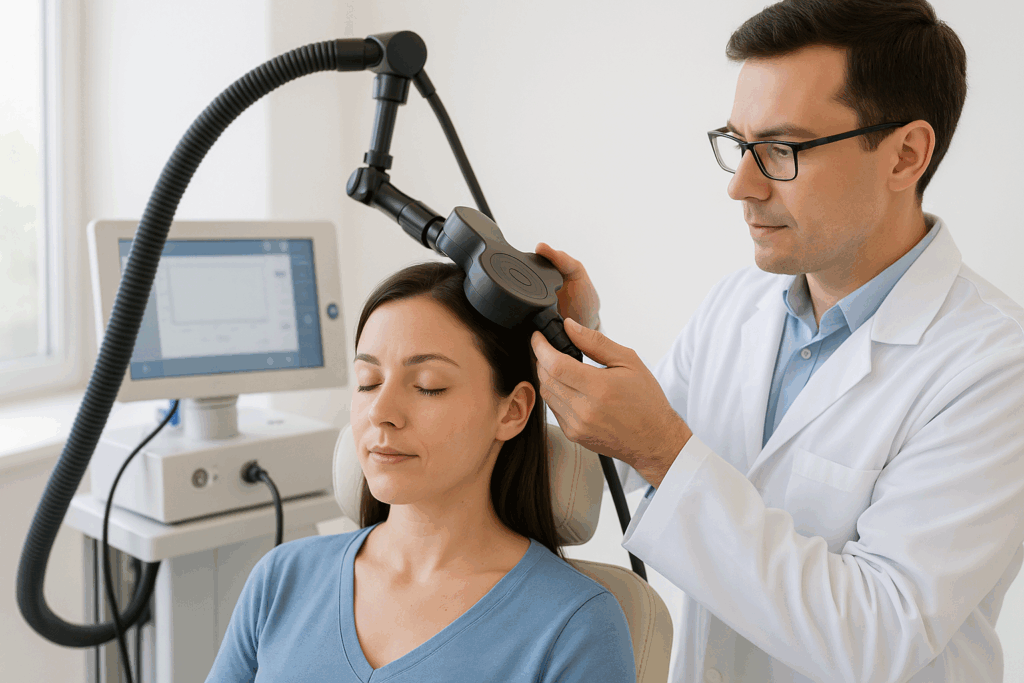
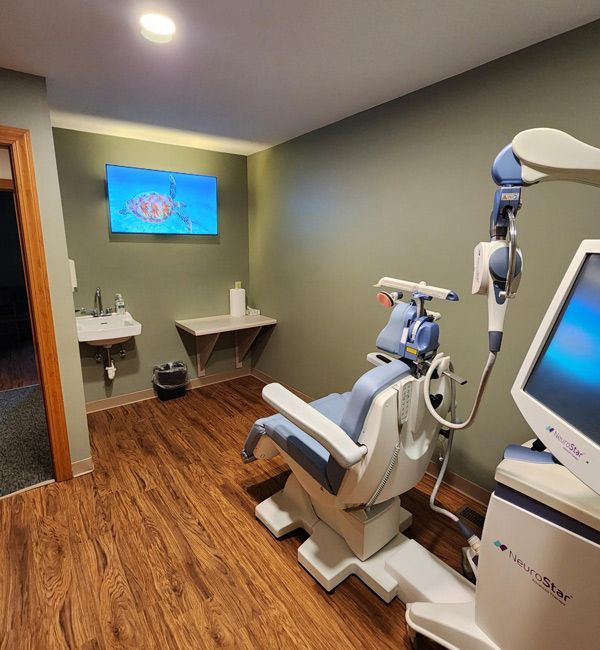
A non-invasive, drug-free approach using targeted magnetic pulses to stimulate mood-regulating brain regions. Patients remain fully awake, require no anesthesia, and can return to daily activities immediately.
5136 East Stop 11 Rd, Suite 30
Indianapolis, Indiana, 46237
Hours
Mon - Fri: 8am - 5pm
Sat - Sun: Closed
When traditional depression treatments fall short, advanced options offer new paths forward. Understanding how TMS and ketamine differ helps you find the right approach for your needs.
A non-invasive, drug-free approach using targeted magnetic pulses to stimulate mood-regulating brain regions. Patients remain fully awake, require no anesthesia, and can return to daily activities immediately.
A medication-based infusion that acts on glutamate pathways to encourage neuroplasticity. Conducted under medical supervision, it may offer rapid relief for severe or treatment-resistant cases.
TMS is frequently covered by many major insurance plans for qualified major depressive disorder diagnoses. Conversely, IV ketamine is often self-pay because it is typically utilized off-label.
As an esketamine nasal spray administered in a certified clinical setting, SPRAVATO stands as an alternative option alongside medication management for severe treatment-resistant depression.
When depression does not improve enough with medication, therapy, or lifestyle changes, it can feel discouraging to keep trying. For many people in Indianapolis and surrounding communities, the next question is no longer whether help is available. It is which advanced depression treatment may fit their needs best.
Two options patients often compare are transcranial magnetic stimulation, also called TMS therapy, and ketamine therapy. Both are used for people with difficult-to-treat depression, but they work in different ways, feel different during treatment, and may differ in insurance coverage.
According to the National Institute of Mental Health, an estimated 21.0 million U.S. adults had at least one major depressive episode in 2021. For patients who have tried standard antidepressants and still feel stuck, treatment-resistant depression deserves a more personalized conversation.
TMS and ketamine are often discussed together because both may be considered when traditional approaches have not provided enough relief. They are not the same treatment, and one is not automatically better than the other.
The right choice depends on several factors, including your diagnosis, symptoms, treatment history, medical risks, medication response, insurance benefits, and how quickly symptoms need to be addressed.
At Accentus Mental Health, patients can explore
TMS therapy in Indianapolis,
IV ketamine therapy, and
SPRAVATO/esketamine treatment through a clinical evaluation designed to match treatment with the person, not just the diagnosis.
TMS therapy is a non-invasive depression treatment that uses targeted magnetic pulses to stimulate areas of the brain involved in mood regulation. It does not require anesthesia, and patients remain awake during treatment.
For many patients, TMS is appealing because it is drug-free, outpatient-based, and does not typically cause the systemic side effects sometimes associated with antidepressant medications, such as weight changes, sexual side effects, or sedation.
TMS is commonly used for major depressive disorder when medication and therapy have not worked well enough. Accentus also provides focused information about TMS for depression and TMS for OCD for patients who want to better understand whether they may qualify.
Research continues to support TMS as a meaningful option for treatment-resistant depression. A 2023 review published in a peer-reviewed medical journal found that nearly 36% of treatment-resistant depression patients receiving rTMS achieved remission, compared with about 8% in placebo groups.
| Feature | TMS Therapy | IV Ketamine Therapy |
|---|---|---|
| Treatment Type | Non-invasive magnetic stimulation | Medication infusion in a monitored setting |
| Common Fit | Depression patients seeking a drug-free, outpatient option | Patients with treatment-resistant depression who may need a different medication-based approach |
| Treatment Experience | Awake, seated, no anesthesia, usually able to return to normal activity afterward | Supervised infusion with monitoring and post-treatment observation; patients need a ride home |
| Timeline | Often completed as a series of sessions over several weeks | Some patients report improvement within hours or days, though results vary |
| Insurance | Often covered by many major plans for qualifying depression cases | Often self-pay because IV ketamine coverage is inconsistent |
SPRAVATO, also known as esketamine, is related to ketamine but is not the same as IV ketamine. It is delivered as a nasal spray in a certified medical setting with required monitoring. For some patients, SPRAVATO treatment in Indianapolis may be another option to discuss, especially if they are comparing medication-based treatments for treatment-resistant depression.
The better question is: which treatment is better for your situation?
TMS may be a stronger fit if you want a non-medication approach, prefer to avoid sedation or dissociation, want to continue normal daily routines after sessions, or may qualify for insurance coverage.
Ketamine therapy may be worth discussing if you have treatment-resistant depression, have not responded to multiple medications, need a treatment that works through a different brain pathway, or are looking for a medically supervised option that may work more rapidly for some patients.
In some cases, a provider may also discuss whether TMS, ketamine, medication management, or therapy should be part of a larger care plan. Depression treatment is rarely one-size-fits-all.
If you are comparing TMS vs ketamine therapy near Indianapolis, the most important step is a professional evaluation. A provider can review your symptoms, medication history, diagnosis, safety considerations, insurance questions, and treatment goals.
Accentus Mental Health helps patients in Indianapolis, Greenwood, Franklin, Plainfield, Avon, and surrounding communities explore advanced options for depression, including TMS therapy, IV ketamine therapy, SPRAVATO, psychotherapy, and medication management.
If depression has not improved enough with traditional treatment, you do not have to guess your next step alone. Schedule a consultation with Accentus Mental Health to discuss whether TMS, ketamine, SPRAVATO, or another treatment path may be appropriate for you.
If you are in immediate crisis or having thoughts of self-harm, call or text 988 or go to the nearest emergency room.
Accentus Mental Health serves Indianapolis and surrounding communities with consultation-driven care.
Experiencing depression or a neurological disorder? Remember, you are not alone. Get help today!





Accentus Mental Health cares greatly about your mental health. If you reside in or near Indianapolis, Greenwood, Franklin, Whiteland, Bargersville, Mooresville, Martinsville, Monrovia, Plainfield, Avon, or the surrounding area, we will help you live the life you were meant to live. Our services are covered by most insurance plans, are FDA-cleared, non-invasive, and involve no drug side effects.