Does TMS Therapy for OCD Work and Should You Consider It?
Did you know that OCD affects 2.5 million adults or 1.2% of the U.S. population? It's a condition that can mess with your ability to enjoy life, as disruptive thoughts and behaviors take over. What's the good news? There's a groundbreaking treatment called transcranial magnetic stimulation (TMS) therapy that might just be the key to setting you free from this crippling mental disorder. Don't let OCD hold you back any longer, find out how TMS for OCD might help you today!
Accentus Health TMS, a mental health clinic in Indianapolis, helps patients take back control of their lives in the face of mental illness, including those who have OCD. If you're wondering whether TMS for OCD is right for you, this article will help. We'll explore what OCD is, how TMS works, what major benefits it offers over traditional treatments, how successful sufferers say they’ve used TMS so far–and most importantly–the steps you need to take if you’re interested in trying out TMS for your own OCD recovery.
What is OCD?
OCD is a mental health condition that can have a significant impact on the lives of those affected. It involves persistent intrusive thoughts, images, or compulsions that cause distress and anxiety. To cope with these experiences, individuals may engage in repetitive behaviors. These behaviors, such as repeated tooth brushing, frequent showers, or counting items, may indicate underlying issues related to OCD.
How OCD Can Impact Your Life
Living with OCD can be incredibly challenging. The constant cycle of thoughts and behaviors can feel overwhelming and disrupt daily life. It's like being trapped in a never-ending, highly stressful loop. From intrusive thoughts to compulsive behaviors, OCD can make even the simplest tasks seem impossible. It's a condition that deeply affects every aspect of a person's life, sometimes making everyday existence a struggle.
When considering treatment options for OCD, it is important to honestly evaluate the impact it has on one's life, including work, relationships, and school. If OCD is negatively affecting these areas, there are solutions available, with TMS therapy being a highly viable option.
TMS for OCD
There is still much to be understood about the precise mechanisms behind mental illness, but ample evidence suggests that problems in the neural networks of the brain play a significant role. Neural networks are formed when neurons collaborate and communicate with each other through neurotransmitters.
Traditionally, mental health providers have focused on influencing the neurotransmitters, but, through TMS therapy, we address and alter your neural pathways directly using a form of magnetic stimulation therapy.
TMS therapy is a proven treatment for OCD, offering hope for those who haven't found relief from traditional medicines.
How TMS Therapy Works
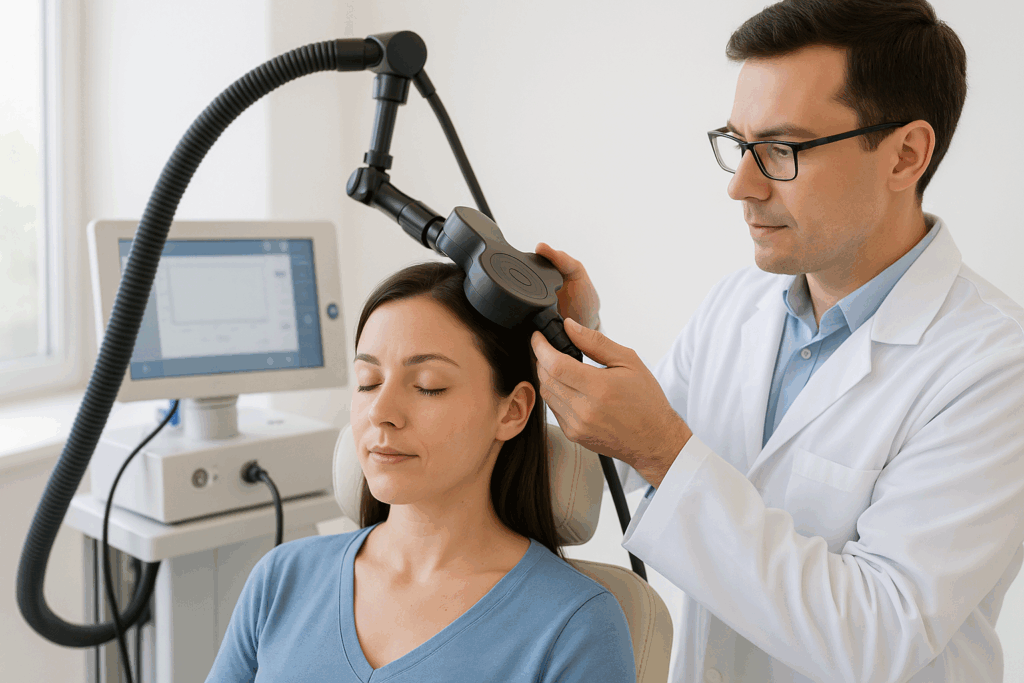
TMS therapy treats OCD by using magnetic pulses on the brain. It is a non-invasive and new treatment option. TMS therapy has been proven effective, especially for those who haven't found relief from traditional therapies or medication. The treatment involves sitting in a chair while a device is placed on your head. The magnetic coil pulses stimulate the brain and help to alleviate OCD symptoms.
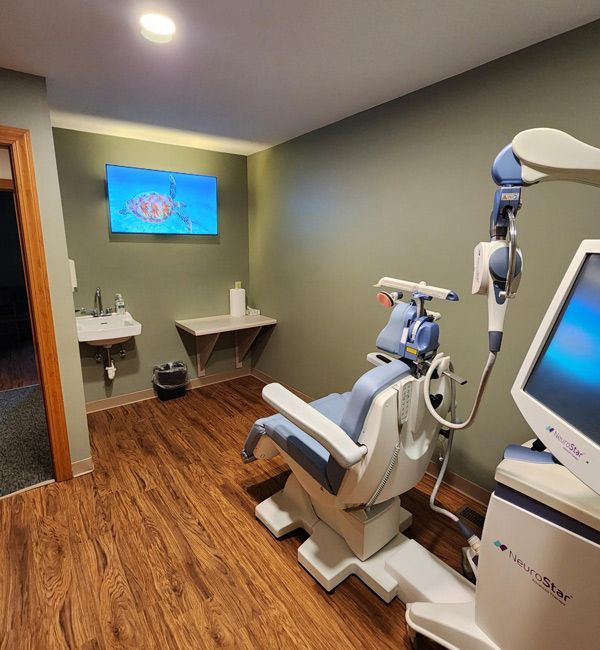
At our practice, we use the NeuroStar TMS system to deliver electromagnetic impulses to stimulate certain areas of your brain, including your dorsolateral prefrontal cortex, orbitofrontal cortex, and presupplementary motor area.
NeuroStar TMS is highly touted by doctors that know its capabilities due to the 4.3 million recorded treatments to date.
By harnessing the power of electromagnetic impulses, we aim to revolutionize your brain's neural networks, rewiring them for a brighter, healthier you. It's a form of physical therapy for the brain that will enable you to say goodbye to OCD symptoms and hello to a new world of positive thoughts, uplifting moods, and empowered behaviors.
It's very important to note what TMS is NOT:
- TMS is NOT medicine
- TMS is NOT Shock Therapy
- TMS is NOT Invasive
Yet TMS is:
- PROVEN Safe & Effective
- COVERED by Most Insurance
Undergoing TMS Therapy
NeuroStar is a noninvasive, outpatient treatment that takes as little as 19 minutes per day. During each session, a cushioned coil is precisely placed against your head while magnetic pulses deliver the therapy to the correct location that regulates mood in your brain.
You may feel a tapping, tingling, or warming sensation where the coil is positioned. This is temporary and typically subsides with subsequent treatments. You will be awake and alert during the treatment and may resume regular activities immediately afterward. NeuroStar has 0 common systemic side effects, allowing you to live life to the fullest.
Want to dive into the NeuroStar System Instructions? You can access a pdf directly from NeuroStar here.
TMS therapy offers several benefits, including noninvasive treatments with session durations ranging from 20 to 40 minutes. There is no downtime after each session, and most patients benefit from a series of treatments. We can determine the most suitable timeline for you during your evaluation.
Get Help With OCD Today
Living with OCD can make everyday life a struggle. From intrusive thoughts and compulsive behaviors, it deeply affects individuals. However, there may be hope with Transcranial Magnetic Stimulation (TMS) therapy. Clinical studies show that TMS could be a promising solution for those seeking relief from OCD.
Break free from the shackles of OCD! Experience revolutionary TMS therapy at our cutting-edge Indianapolis TMS clinic. Contact Accentus Health TMS today for a consultation for help with OCD. NeuroStar TMS is covered by Medicare and most national insurance carriers.
Local to Indianapolis? Call us to discuss your options.
(317) 721-4169
Cited Sources:
Janicak PG, O'Reardon JP, Sampson SM, Husain MM, Lisanby SH, Rado JT, Heart KL, Demitrack MA. Transcranial magnetic stimulation in the treatment of major depressive disorder: a comprehensive summary of safety experience from acute exposure, extended exposure, and during reintroduction treatment. J Clin Psychiatry. 2008 Feb;69(2):222-32. doi: 10.4088/jcp.v69n0208. PMID: 18232722.
Steuber ER, McGuire JF. A Meta-analysis of Transcranial Magnetic Stimulation in Obsessive-Compulsive Disorder. Biol Psychiatry Cogn Neurosci Neuroimaging. 2023 Nov;8(11):1145-1155. doi: 10.1016/j.bpsc.2023.06.003. Epub 2023 Jun 19. PMID: 37343662.
QUICK LINKS
REQUEST A CONSULTATION
Experiencing depression or a neurological disorder? Remember, you are not alone. Get help today!

TMS THERAPY CAN HELP WITH:
- Depression
- Lack of Joy
- Sadness and Despair
- Low Mood
- Lethargy
- Insomnia
- Oversleeping
- Social Isolation
- Self-Harm
- Substance Abuse
- Suicidal Ideation
- Alcoholism